


Sewage Cleanup in Vancouver, Washington
Sewage in a home or business needs prompt, careful cleanup. Wastewater can spread through a basement, bathroom, laundry room, crawl space, or commercial space and affect floors, walls, contents, and shared areas. Our team removes contaminated water, cleans affected surfaces, and helps you plan the repairs that follow.
Keep children, pets, and other occupants away from the affected area. Do not touch standing sewage or track it through the building. If it is safe to do so, stop the source without entering contaminated water. Then call our team for a safety assessment and a clear plan.
We start by assessing safety and locating the source. A drain blockage, failed pipe, damaged lateral, sump problem, or heavy rain can change the work plan. Source control comes first so more wastewater does not enter the property.
Need Restoration Help in Vancouver? Call (360) 362-8830
We help homeowners, landlords, property managers, and commercial property owners. Our IICRC certified techs inspect the source and the spread before work begins. We take photos, record moisture readings, explain the work, and use controlled extraction and drying so you can make informed decisions about the property.
How Our Sewage Cleanup Process Works
Next, we use extraction equipment to remove standing sewage and water. We inspect carpet, pad, drywall, insulation, flooring, baseboards, cabinets, framing, and contents. Materials that cannot be safely cleaned are removed and documented. This keeps contaminated items from remaining in the building.
Surfaces that can remain are cleaned and disinfected. Our technicians wear personal protective equipment and keep clear work limits around contaminated areas. Containment helps prevent wastewater and debris from spreading into clean parts of the property.
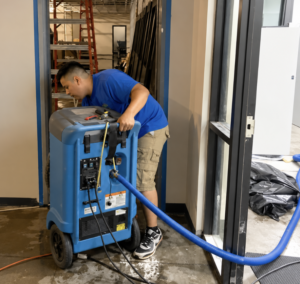
After cleaning, we place air movers and dehumidifiers based on moisture readings. Moisture meters help us check walls, floors, framing, and other materials that may hold water below the surface. We monitor those readings and adjust the structural drying plan as conditions change.
If a sewage loss follows fire suppression work, our team can help coordinate the cleanup steps for both types of damage through fire damage cleanup. For a lower-level loss, Flooded Basement cleanup may involve the same careful attention to extraction, materials, and drying. If moisture remains after the cleanup, mold removal requires a separate assessment and focused work.
When extraction, cleaning, and drying are complete, we review repair needs with you. Repairs may involve drywall, flooring, trim, insulation, or other finishes. We explain what we found and keep records of the work for your property files.
Sewage Backup Risks in Vancouver Properties
Older homes and mixed-use buildings in areas such as Esther Short may have finished lower levels, shared walls, and tight access routes. Those conditions can let sewage move into connected rooms and make equipment placement more difficult. In these properties, we check adjoining spaces instead of focusing only on the visible water.
Around Fourth Plain, apartments, retail spaces, offices, and homes sit near busy commercial roads. A loss there can affect tenants, customers, entrances, and deliveries while cleanup is underway. We set work limits and access paths around the building's daily needs.
How Vancouver Weather Can Affect Sewage Losses
Winter rain can overwhelm roof, footing, and surface drainage when the soil is already saturated. Fall leaves can block drains and catch basins. Freezing weather can also damage exposed hose bibs and water pipes in garages, crawl spaces, and exterior walls.
After heavy rain, we check whether the loss came from a building pipe, a drain backup, or water entering from outside. That source changes the cleanup plan. Spring runoff can add pressure to low areas and drainage systems, while summer irrigation, appliance, and air-conditioning leaks can cause hidden moisture before a problem is noticed.
Who We Help With Sewage Cleanup
Homeowners often need help with backups in finished basements, bathrooms, laundry rooms, and crawl spaces. Landlords and property managers also need a clear plan for access, tenant communication, shared plumbing, and repair decisions. Our team documents which areas need extraction, cleaning, drying, removal, or later repair.
Commercial properties may have several affected rooms, stored contents, shared utilities, or occupied areas that need to remain open. We plan equipment placement and work zones around safe access. Offices, retail spaces, warehouses, and other business properties may also require careful documentation to reduce disruption.
How Our Sewage Cleanup Process Works
First, we look for the source and assess safety concerns. A drain blockage, failed pipe, damaged sewer lateral, sump problem, or heavy rain can change the cleanup plan. We control the source before removing wastewater whenever possible.
Soft materials that cannot be safely cleaned are removed and documented.
We then clean and disinfect surfaces that can remain. Our technicians use personal protective equipment and keep work limits around contaminated areas. Containment helps keep the loss from spreading through the building.
Moisture meters help us check walls, floors, framing, and other materials. We monitor those readings and adjust the drying plan as the building dries.
When cleanup and drying are complete, we review repair needs with you.
Sewage Backup Risks in Vancouver Properties
Many Vancouver ranch, colonial, and tri-level homes were built from the 1950s through the 1970s. Aging plumbing, sump systems, finished basements, and attached garages can affect how sewage travels and where moisture remains. We check connected rooms and hidden areas instead of focusing only on visible water.
Townhomes and multifamily buildings need close attention to shared plumbing, walls, floors, and utility spaces. Commercial properties near the Big Beaver business corridor may have broad interiors, shared entrances, and difficult equipment access. Our crew plans the work zone around those conditions.
For immediate help with water damage in Vancouver, call (360) 362-8830 to discuss what happened and the next steps for your property.
How Vancouver Weather Affects Sewage Cleanup
Winter freeze-thaw cycles can contribute to burst supply lines, frozen exterior plumbing, and icy access around a property. Spring snowmelt and heavy rain can increase pressure on yards, drains, sump systems, and lower-level entrances. Fall leaves can block gutters, catch basins, and drainage paths before a storm.
After severe rain, we check whether the loss came from a building pipe, a drain backup, or water entering from outside. That source changes the cleanup plan. We focus on the actual conditions at your Vancouver property rather than assuming every address has the same drainage problem.
Frequently Asked Questions
What should I do first after a sewage backup?
Keep people and pets away from the affected area and avoid touching or tracking the sewage. If it is safe, stop the source without entering contaminated water, then call our team for a safety assessment.
Can I clean sewage water myself?
No. Avoid handling standing sewage or contaminated materials yourself. Our technicians use personal protective equipment, controlled work areas, extraction equipment, cleaning, disinfection, and drying procedures.
What materials are often removed after sewage contamination?
Porous materials such as carpet pad, some drywall, insulation, and heavily affected contents often require removal. We inspect each material and document the condition before making that decision.
Do you help with sewage backups in rental properties?
Yes. We work with landlords and property managers on access, tenant communication, shared plumbing, documentation, extraction, cleaning, and repair planning.
How do you dry a property after sewage cleanup?
We use moisture meters to locate trapped moisture, then place air movers and dehumidifiers based on the readings. We monitor affected walls, floors, framing, and other materials during the drying process.
Can sewage affect areas that do not have visible water?
Yes. Wastewater can move into adjoining rooms, wall cavities, flooring systems, and utility areas. We inspect connected spaces rather than limiting the assessment to the visible spill.
Do you provide sewage cleanup for commercial properties?
Yes. We plan commercial cleanup around occupants, access, stored contents, shared utilities, customer areas, and business operations. Work zones and equipment placement are arranged to protect unaffected areas.
What happens after the sewage cleanup is finished?
We review the drying results and identify repair needs such as drywall, flooring, trim, or insulation work. You receive an explanation of what we found and records for your property files.